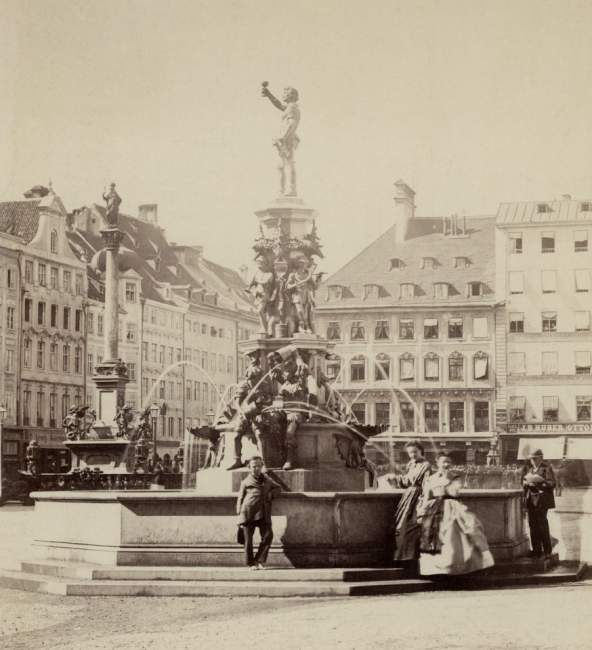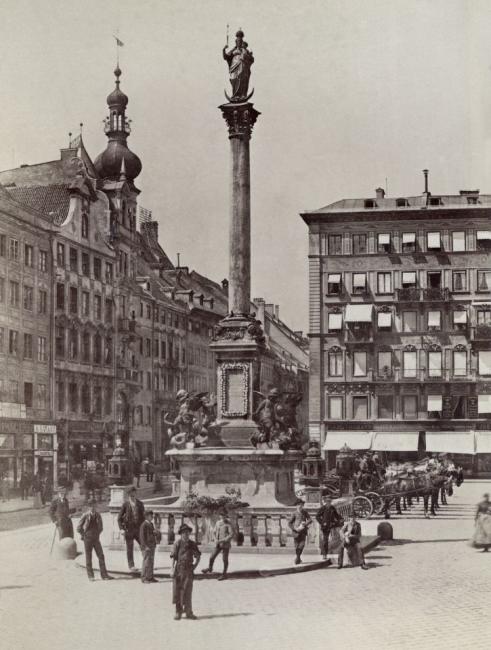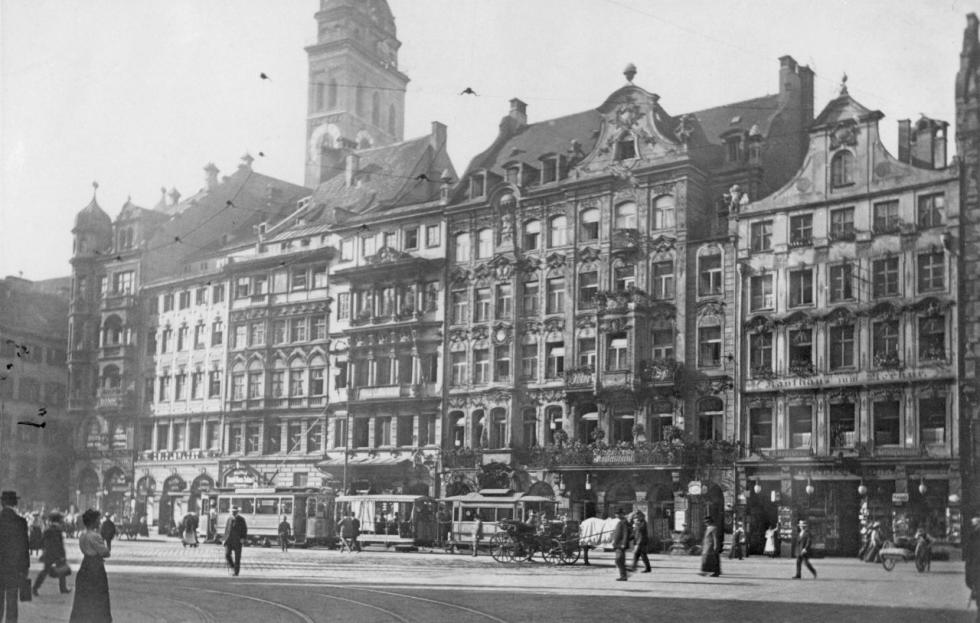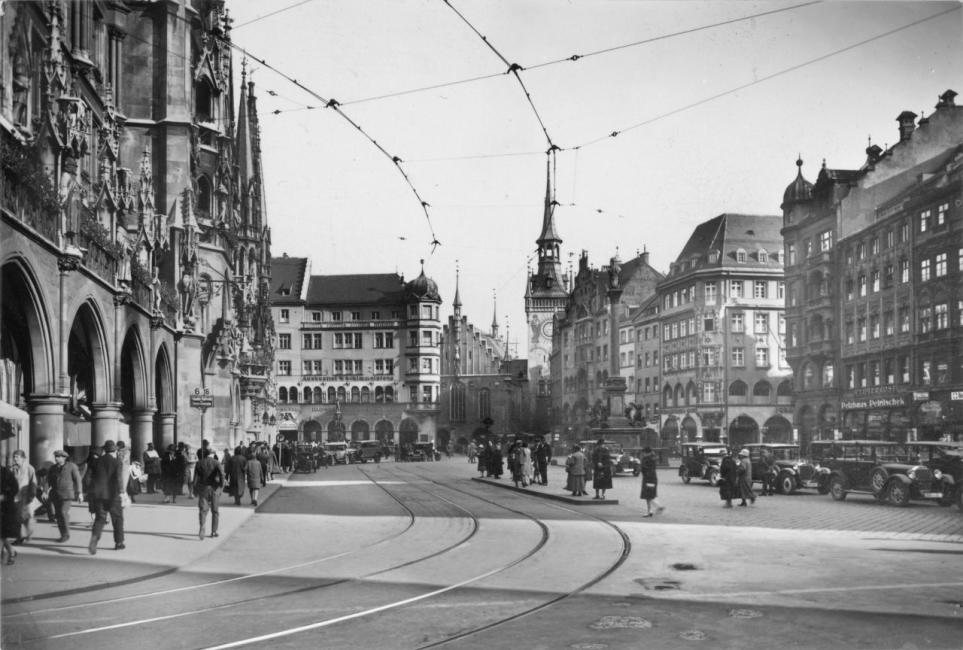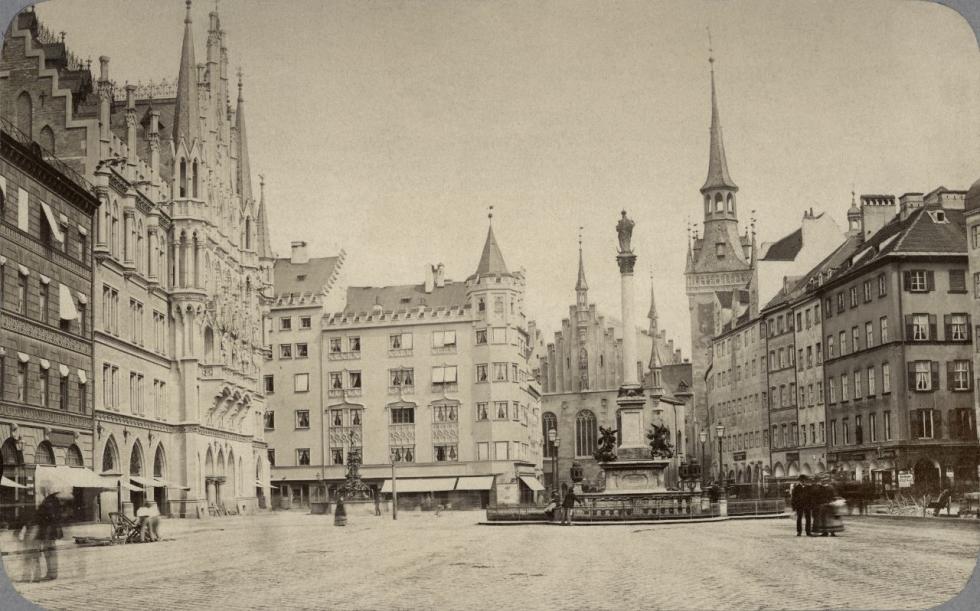
The history of the house in which, according to legend, the Weißwurst was later to be invented goes back a long way – it was first mentioned in records around 1500. Originally an ensemble of two buildings with several storeys, from 1700 onwards it presented itself as a magnificent town house with five floors, onion-domed turrets, picturesque roof structures and corner oriels – a late-medieval, richly decorated appearance that it kept until the 19th century.
- 1857
The birth of the Weißwurst
This year is regarded as the year of birth of the original Munich Weißwurst. According to legend, it was here at the “Zum Ewigen Licht” inn, on 22 February – Shrove Sunday – that “Moser Sepp” made the Weißwurst more or less by accident: it was originally meant for the frying pan, but as a “failed batch” it had to be heated in water instead. After that, the Munich Weißwurst was soon on everyone’s lips, and to this day it holds a very special place in Bavaria – especially at carnival time and during the Oktoberfest.
- 1904+ 1944
The “Peterhof”
At the turn of the century, a new building was erected on this site, continuing the old tradition as a restaurant and hotel. It was renamed “Peterhof” because St. Peter’s Church stands close by. In the same year, the building complex was acquired by the Hacker brewery.
During the Second World War, in 1944, the birthplace of the Weißwurst suffered severe setbacks: the building was almost completely destroyed. The Hotel Peterhof initially survived, but was completely demolished during the war.
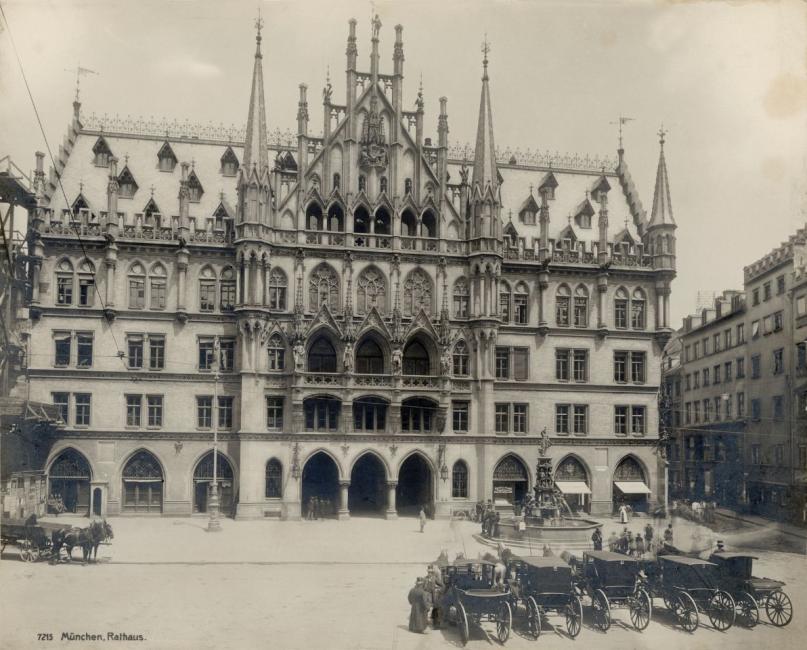
Marienplatz around 1906 – shortly after the Peterhof was built. - 1957+ 1977
Reconstruction and conversion
Exactly 100 years after the birth of the Weißwurst, the difficult post-war years were followed by brighter days: in the 1950s the Hacker brewery rebuilt the house, which – under the new address Marienplatz 22 – was home to a cinema, two restaurants and the PresseClub.
In 1977, Marienplatz 22 was converted to plans by Gustaf Pfeffer. The Hugendubel bookshop, spread over three floors, later moved in. The Peterhof restaurant was extended, the existing atrium was retained, and a rooftop café with terrace was added on the sixth floor.
- 1996
A rotunda with skylight
In 1996, Marienplatz 22 was altered once again, this time to plans by the Munich architects Stöter-Tillmann and Kaiser: by closing the inner courtyard, a rotunda with a skylight was created on the upper floor, and the rear part of the building was completely gutted. The PresseClub moved into new offices on the fourth floor, and the Paulaner brewery realised a restaurant concept above Munich’s rooftops.
- 2001
Modernisation
In 2001, the same architects as in 1996 drew up new plans to modernise the commercial building at Marienplatz 22 – this time the work took place mainly inside. The PresseClub took over the entire fourth floor. The Restaurant-Café am Marienplatz “Zum Ewigen Licht” remained as the birthplace of the Weißwurst, with its lovely terrace overlooking Marienplatz.
- 2017
Reopening as Wildmosers
After Wildmosers Restaurant-Café am Marienplatz had been closed for some time, it finally reopened in 2017. With a fine Munich menu, the birthplace of the Weißwurst is a delight and a treat for visitors and locals alike. The renowned Munich architects Goergens Miklautz are responsible for the coherent, contemporary appearance of the house, and the renowned Munich architects lauber zottmann blank for the overall concept and interior design.
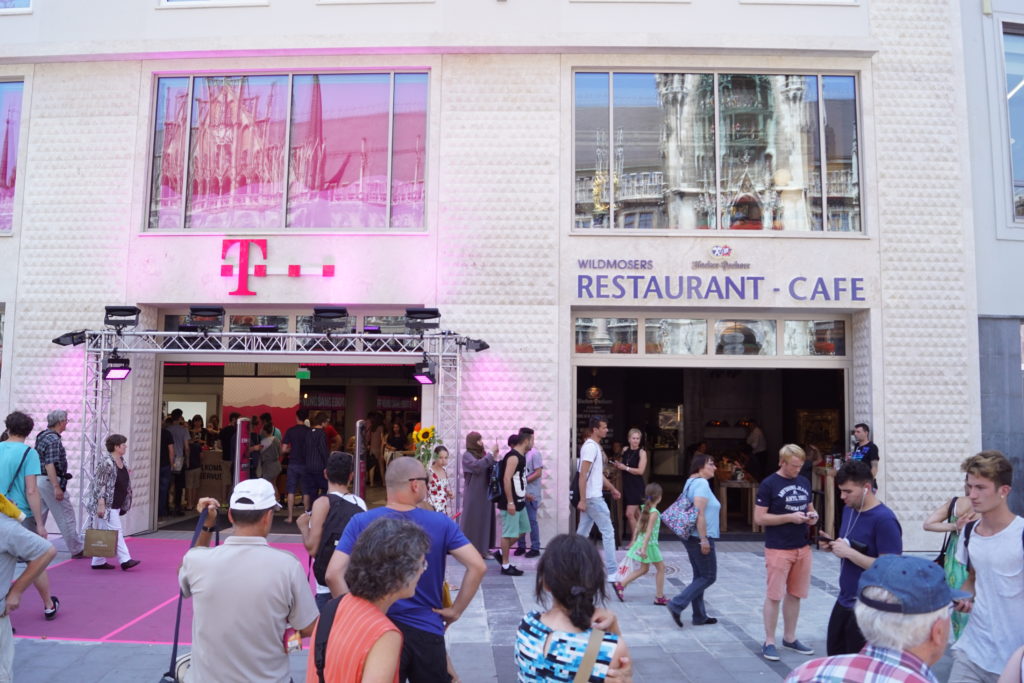
Reopening in August 2017 – more pictures in the gallery.